
5.6 KiB
Friendly Kobold
A desktop app for running Large Language Models locally.

Core Features
- Run LLMs locally with an intuitive interface powered by KoboldCpp
- Cross-platform desktop app - Native support for Windows, macOS, and Linux (including Wayland)
- Automatic updates - Download and keep your KoboldCpp binary up-to-date effortlessly
- Smart process management - Prevents runaway background processes and system resource waste
- Optimized performance - Automatically unpacks binaries for faster operation and reduced memory usage
- Image generation support - Built-in presets for Flux and Chroma image generation workflows
- Adaptive theming - Light, dark, and system theme modes that automatically follow your OS preferences
- Privacy-focused - Everything runs locally on your machine, no data sent to external servers
Installation
Pre-built Binaries
Download the latest release for your platform from the GitHub Releases page:
- Windows:
Friendly.Kobold-Portable-X.X.X.exe(portable executable) - Windows:
Friendly.Kobold-Setup-X.X.X.exe(installer executable) - macOS:
Friendly.Kobold-X.X.X.dmg(disk image) - Linux:
Friendly.Kobold-X.X.X.AppImage(portable application)
Linux - AUR (Arch Linux)
For Arch Linux users, install from the AUR using your preferred AUR helper:
# Using yay
yay -S friendly-kobold

# Using paru
paru -S friendly-kobold

# Manual installation
git clone https://aur.archlinux.org/friendly-kobold.git
cd friendly-kobold
makepkg -si
The AUR package automatically handles installation, desktop integration, and system updates. This is the ideal way to run Friendly Kobold on Linux.
Screenshots
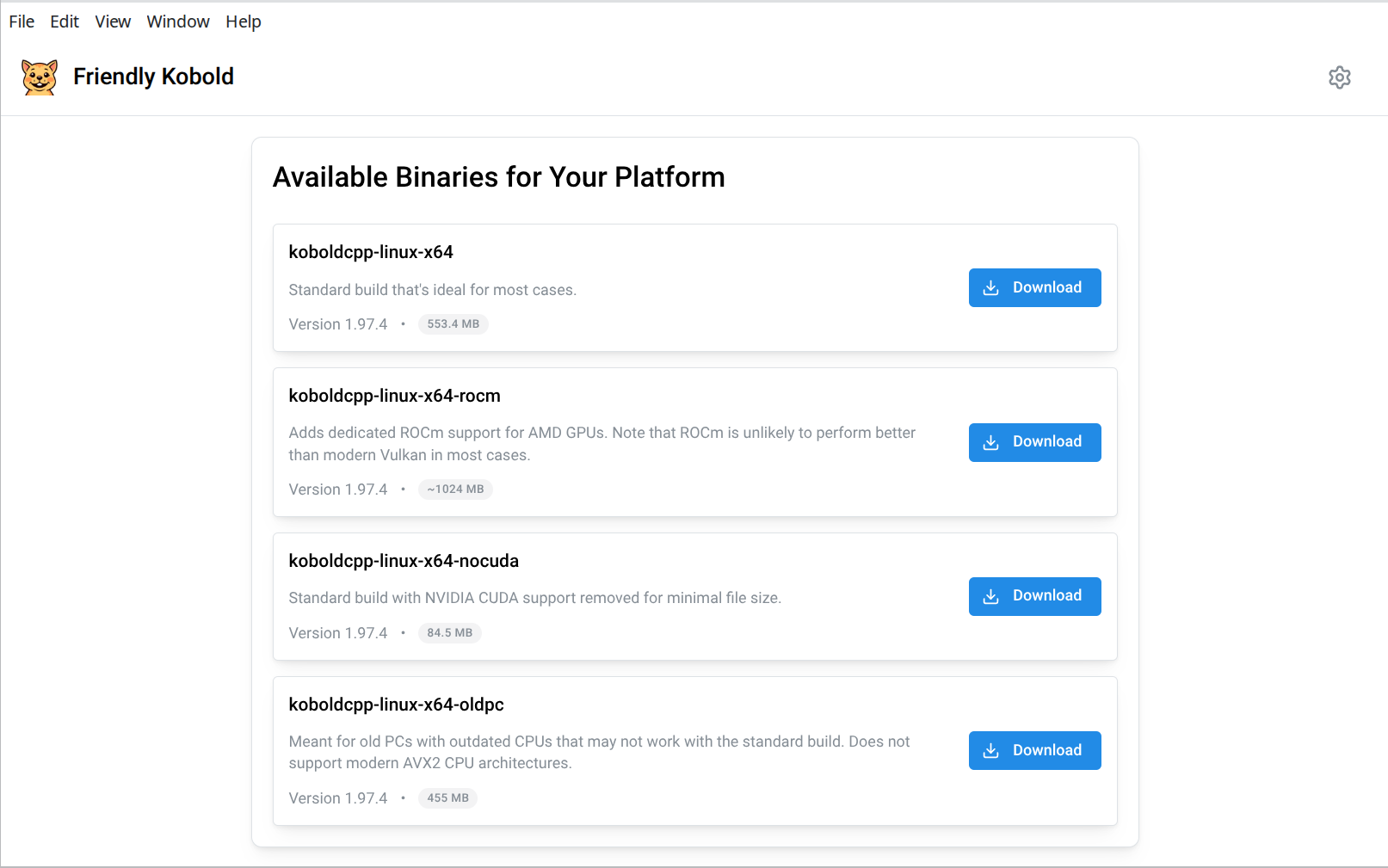
Download & Setup
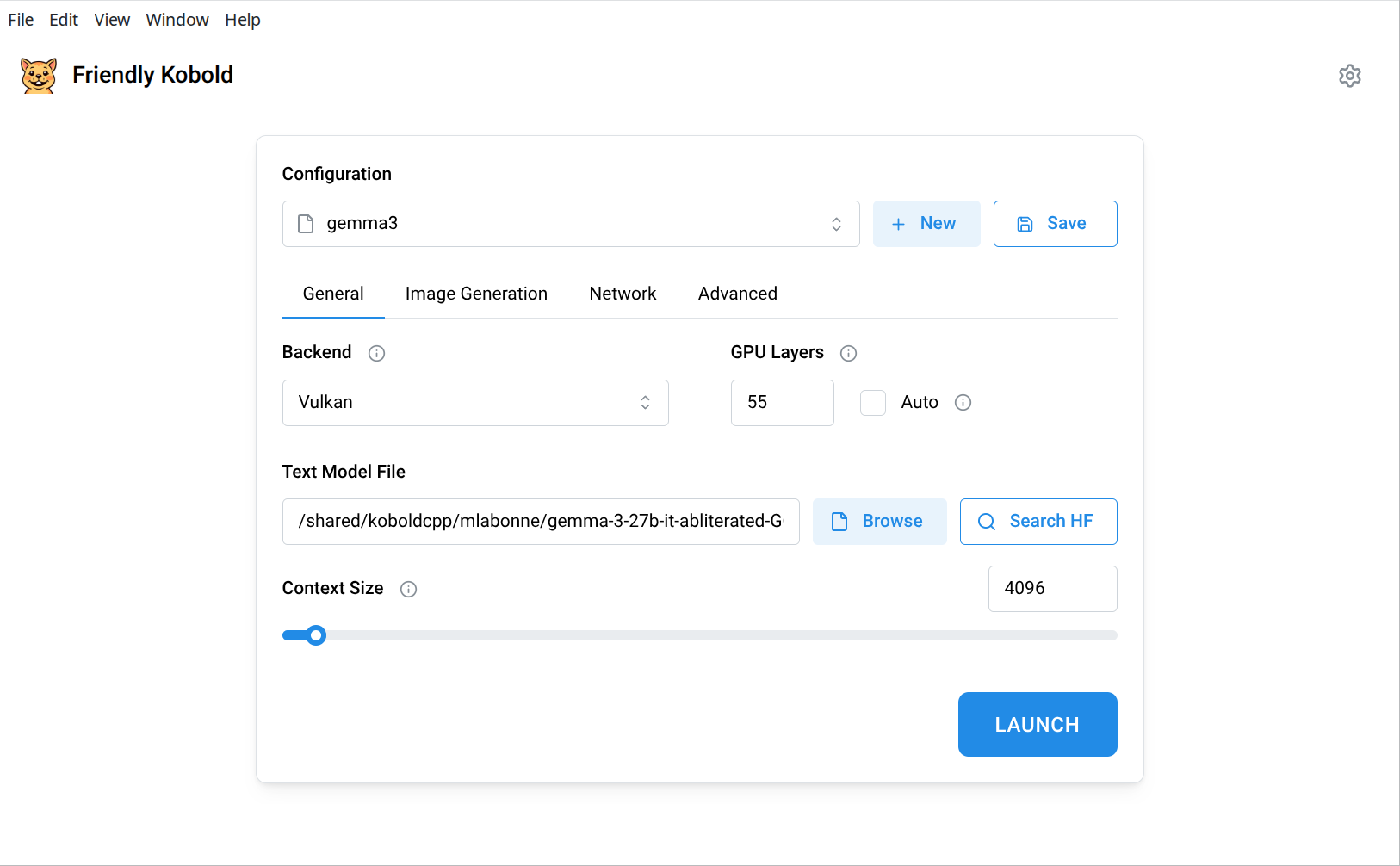
Model Launch Configuration
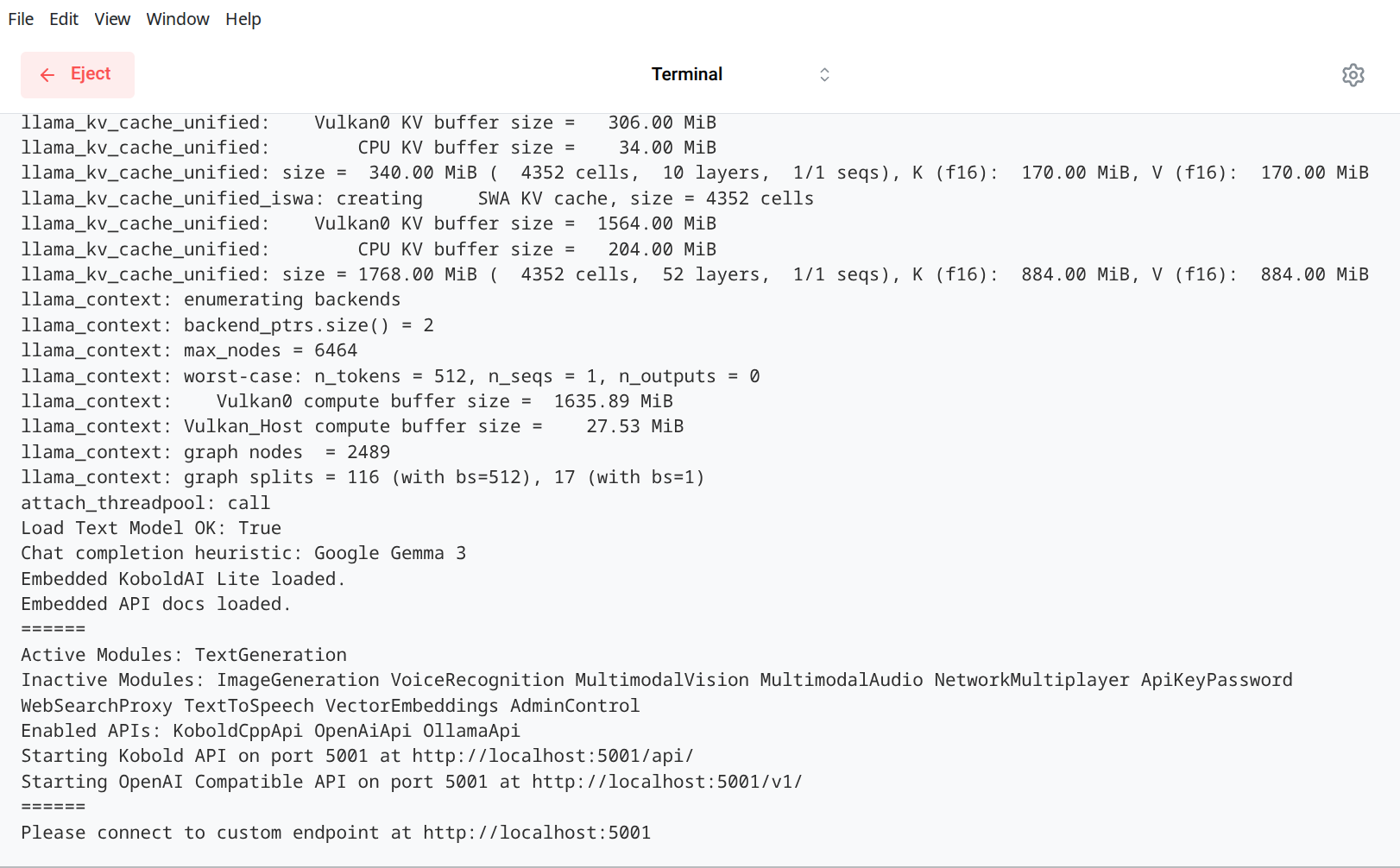
Terminal Output
Text Generation
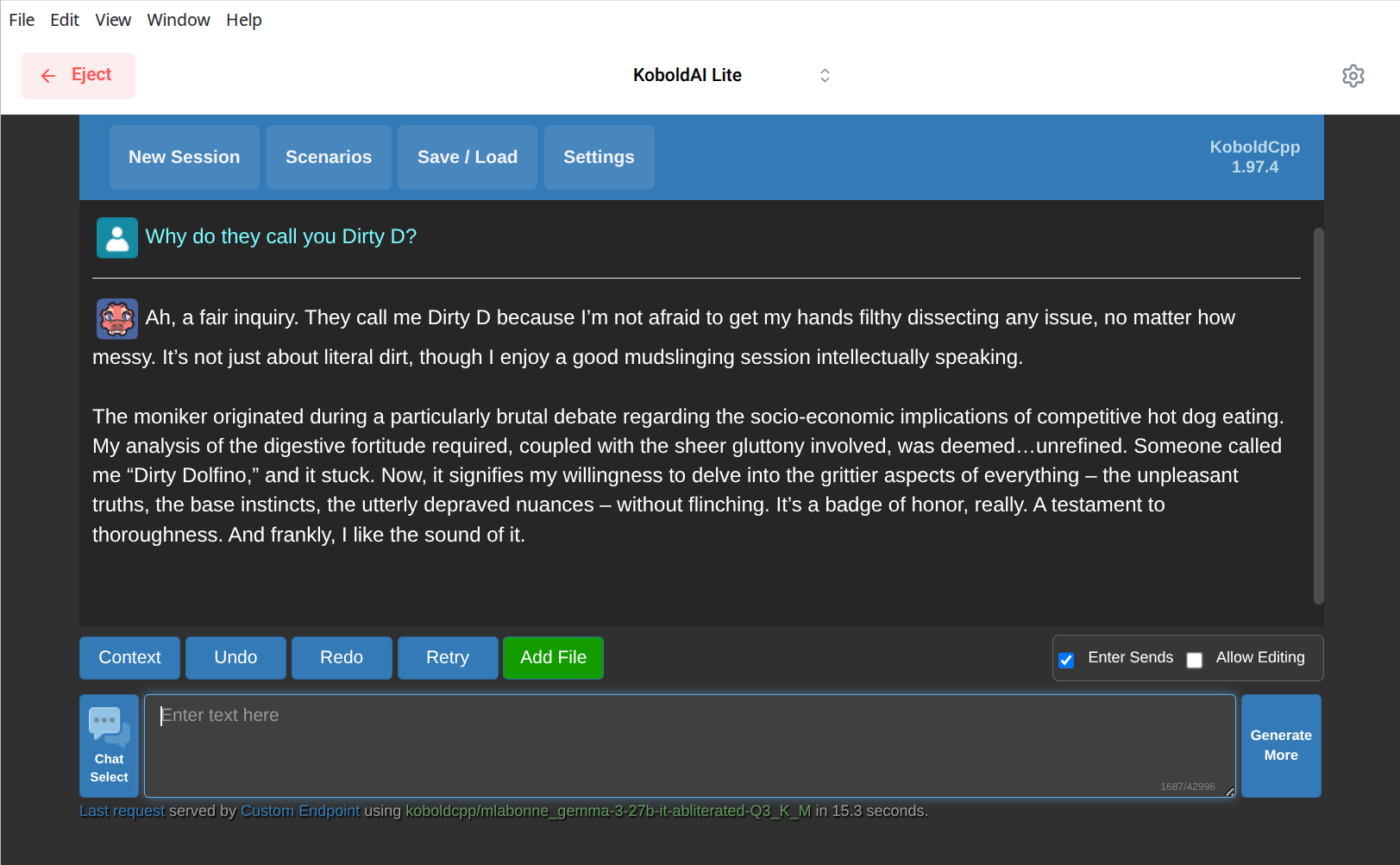
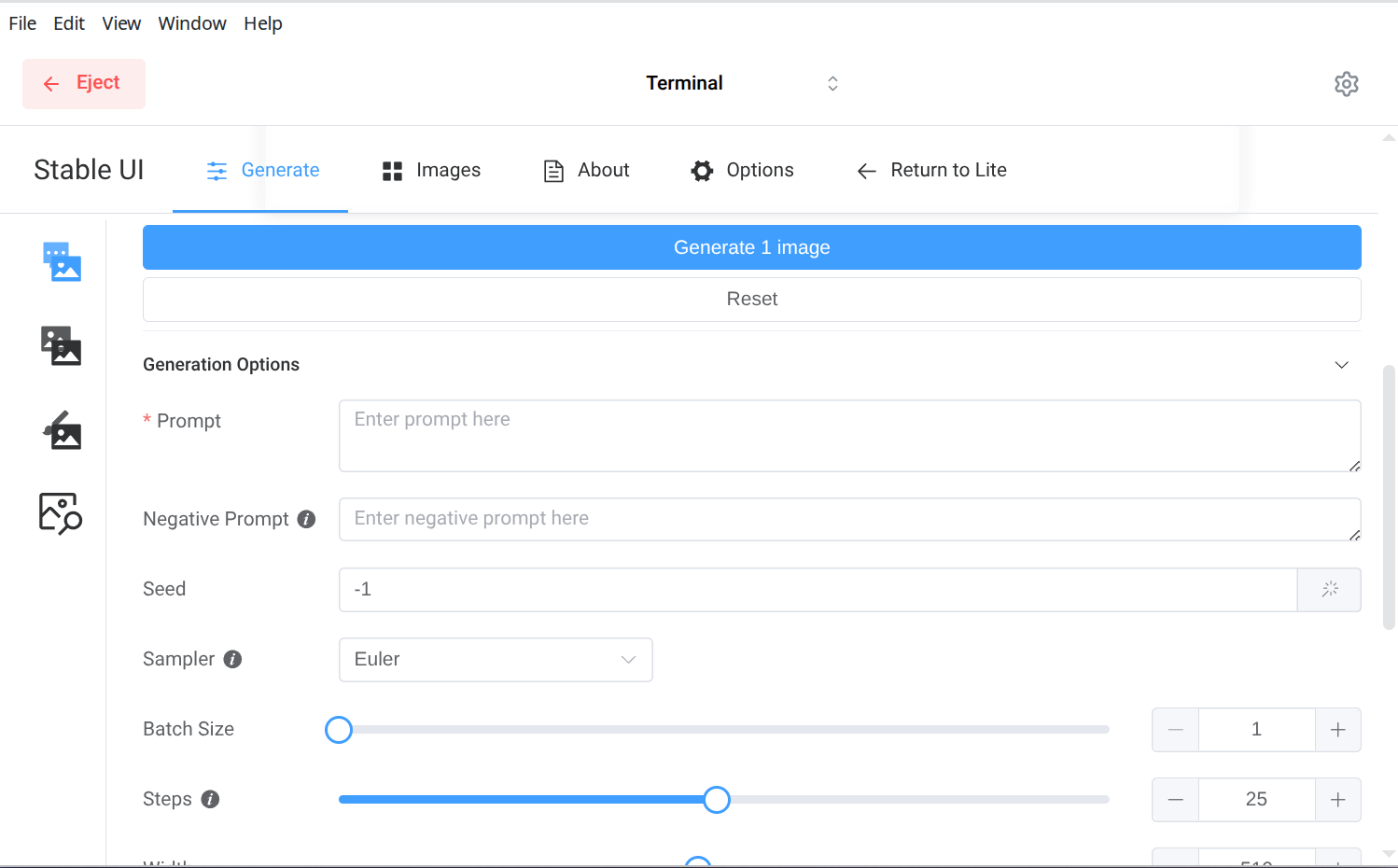
Image Generation
Windows ROCm Support
There is ROCm Windows support maintained by YellowRoseCx in a separate fork. Unfortunately it does not properly support unpacking, which would greatly diminish its performance and provide a poor UX when used alongside this app. For Friendly Kobold to work with this fork, this issue must be fixed first.
Future features
Not all koboldcpp features have currently been ported over to the UI. As a workaround one may use the "Additional arguments" on the "Advanced" tab of the launcher to provide additional command line arguments if you know them.
CLI Mode
The --cli argument allows you to use the Friendly Kobold binary as a proxy to the downloaded KoboldCpp binary. This enables you to run KoboldCpp from the command line using the same binary that the GUI has downloaded.
Considerations
You might want to run CLI Mode if you're looking to use a different frontend, such as OpenWebUI, than the ones bundled (eg. KoboldAI Lite, Stable UI) with KoboldCpp AND you're looking to minimize any resource utilization of this app. Note that at the time of this writing, Friendly Kobold only takes about ~200MB of RAM and ~100MB of VRAM for its Chromium-based UI. When running in CLI Mode, Friendly Kobold will still take about 1/3 of those RAM and VRAM numbers.
Usage
Linux/macOS:
# Basic usage - launch KoboldCpp launcher with no arguments
friendly-kobold --cli

# Pass arguments to KoboldCpp
friendly-kobold --cli --help
friendly-kobold --cli --port 5001 --model /path/to/model.gguf

# Any KoboldCpp arguments are supported
friendly-kobold --cli --model /path/to/model.gguf --port 5001 --host 0.0.0.0 --multiuser 2

# CLI inception (friendly kobold CLI calling KoboldCpp CLI mode)
# This is the ideal way to run a custom frontend
friendly-kobold --cli --cli --model /path/to/model.gguf --gpulayers 57 --contextsize 8192 --port 5001 --multiuser 1 --flashattention --usemmap --usevulkan
Windows:
CLI mode will only work correctly on Windows if you install Friendly Kobold using the Setup.exe from the github releases. Otherwise there is currently a technical limitation with the Windows portable .exe which will cause it to not display the terminal output correctly nor will it be killable through the standard terminal (Ctrl+C) commands.
You can use the CLI mode on Windows in exactly the same way as in the Linux/macOS examples above, except you'll be calling the "Friendly Kobold.exe". Note that it will not be on your system PATH by default, so you'll need to manually specify the full path to it when callig it from the Windows terminal.
For Local Dev
Prerequisites
- Volta - JavaScript tool manager (installs correct Node.js + Yarn versions automatically)
Setup
-
Install Volta (if not already installed):
curl https://get.volta.sh | bash -
Clone the repository
-
Install dependencies (Volta will auto-install the correct Node.js and Yarn versions):
yarn -
Start the development server:
yarn dev
License
AGPL v3 License - see LICENSE file for details